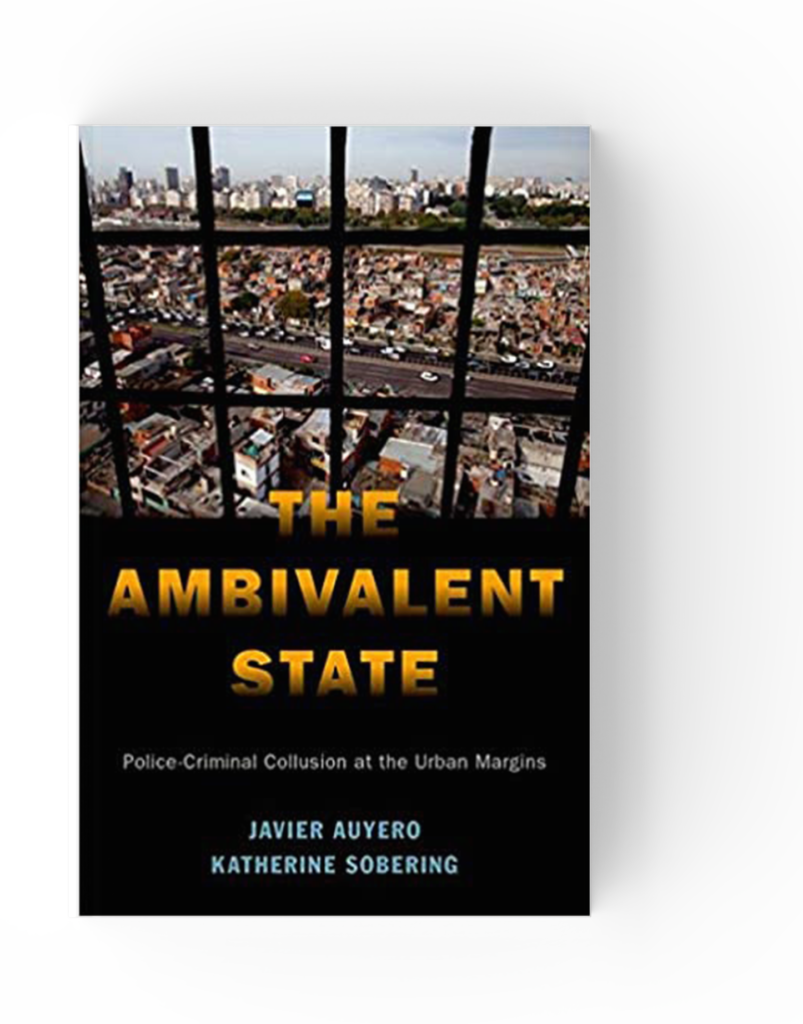
The Ambivalent State
Police-Criminal Collusion at the Urban Margins (Global and Comparative Ethnography)
Over the last few decades, debates about policing in poor urban areas have turned from analyzing the state’s neglect and abandonment into documenting its harsh interventions and punishing presence. Yet, we know very little about the covert world of state action that is hidden from public view. In The Ambivalent State, Javier Auyero and Katherine Sobering offer an unprecedented look into the clandestine relationships between police agents and drug dealers in Argentina. Drawing on a unique combination of ethnographic fieldwork and documentary evidence, including hundreds of pages of wiretapped phone conversations, they analyze the inner-workings of police-criminal collusion, its connections to drug markets, and how it promotes cynicism and powerlessness in daily life. They argue that an up-close examination of covert state action exposes the workings of an ambivalent state: one that both enforces the rule of law and functions as a partner in criminal behavior. The Ambivalent State
develops a political sociology of violence that focuses not only on what takes place in police stations, courts, and poor neighborhoods, but also the clandestine actions and interactions of police, judges, and politicians that structure daily life at the urban margins.